
Evergreen Trees - Nature’s Year-Round Guardians (And How to Grow Them)

🌲 Spoiler: This Is Where The Clothing Brand Shows Up. Hear us out — every order plants 3 trees and sends 2% to wildlife conservation. We think that earns us a few seconds of your attention. → Explore Nature-Inspired Collections

Why Evergreen Trees Never Lose Their Charm
Unlike deciduous trees that undergo seasonal leaf shedding, evergreen trees maintain their vibrant foliage throughout the year thanks to extraordinary evolutionary adaptations that make them nature's ultimate survivalists. Conifers like pines, spruces, and firs employ multiple protective strategies: their needle-shaped leaves feature waxy cuticles that reduce water loss by 30-50% compared to broadleaf trees (as documented in USDA research), while their slender form sheds snow 70% more efficiently than flat leaves.
Remarkably, species like the white spruce produce antifreeze proteins that prevent cellular damage even at temperatures below -40°F. Broadleaf evergreens such as hollies and rhododendrons have equally impressive adaptations, including thick, leathery leaves with sunken stomata and hairy undersides (like mountain laurel) that trap insulating air pockets.
Below ground, evergreens showcase root system mastery - their roots continue water uptake at 28°F, form expansive mycorrhizal networks reaching three times beyond their canopy, and develop deep taproots (white pine roots extend 20+ feet) for storm resistance. Photosynthetic innovations allow them to retain chlorophyll in specialized chloroplasts, utilize dark pigmentation to absorb winter UV radiation, and operate efficiently with just one-tenth the sunlight deciduous trees require.
As the USDA Urban Forest Study notes, a single mature Douglas fir can intercept over 6,000 gallons of rainfall annually, reducing urban runoff by 65% - proving these botanical marvels are as ecologically vital as they are visually enduring.
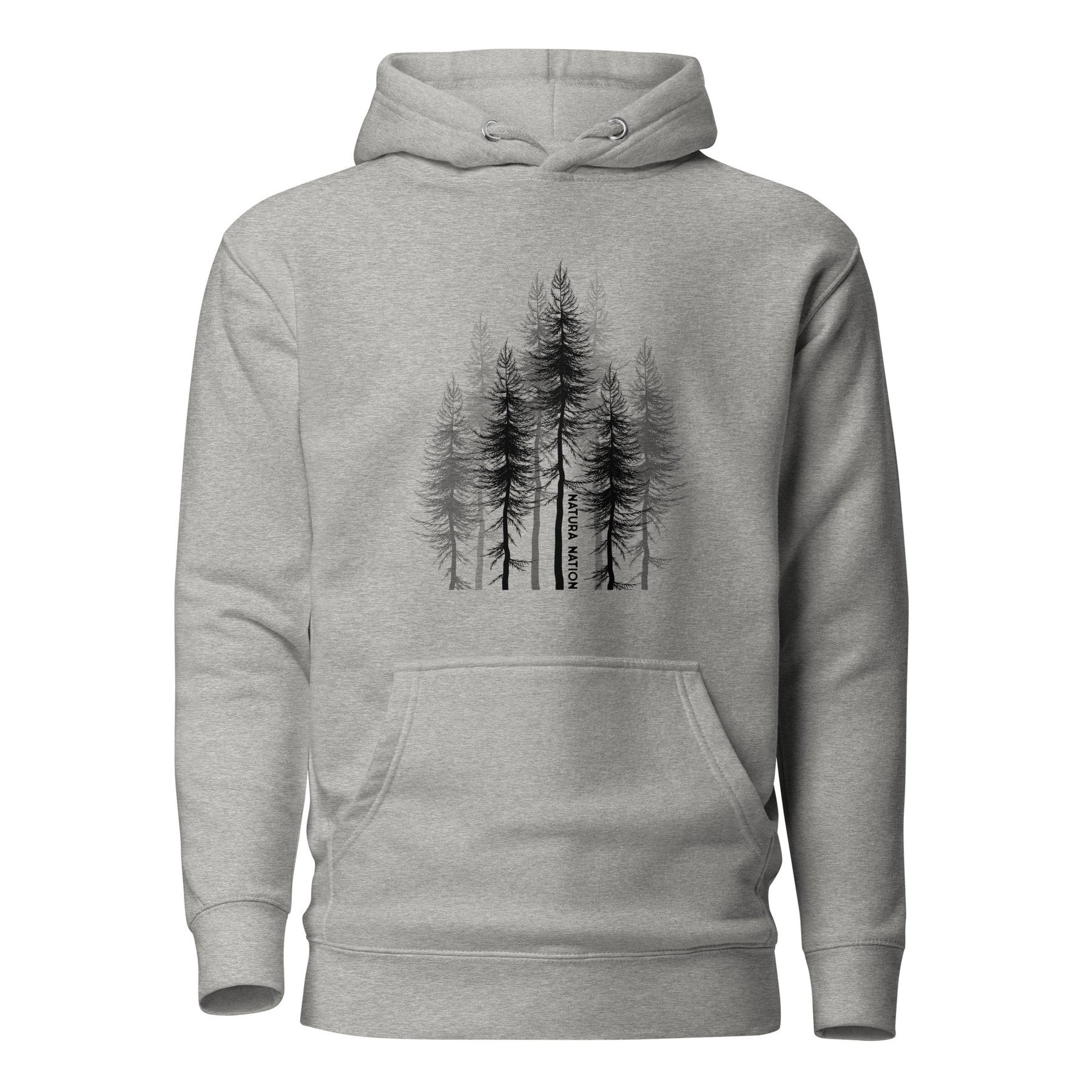
For those who know that forest silence isn't silent at all
Whispering Forest Pines
The forest is never actually quiet. There's always something; a branch shifting, water moving somewhere you can't see, the canopy breathing above you. Learning to hear it is the thing. This hoodie was made for people who've learned to hear it.
Wear what moves you. Wear nature. 🌲
5 Essential Evergreen Trees for Every Landscape
From stately windbreaks to vibrant winter accents, these five evergreen trees offer year-round beauty and ecological benefits for diverse landscapes. For more on the names of trees and their origins, check out our guide on Tree Names. The Eastern White Pine (Pinus strobus), a fast-growing native of eastern North America (Zones 3-8), features soft blue-green needles in clusters of five that provide food for 21 bird species and nesting sites for bald eagles, thriving best in sandy loam soils (pH 4.0-6.5) spaced 25-30 feet apart.
For striking color, the Colorado Blue Spruce (Picea pungens) from the Rocky Mountains (Zones 2-7) includes cultivars like the compact 'Fat Albert' (15x10 ft) with intense blue needles that reflect 30% more sunlight than green varieties, requiring only monthly deep watering during droughts.
The American Holly (Ilex opaca) adds festive charm with its red winter berries (produced when male/female pairs are planted) that feed overwintering birds from December through March. Privacy seekers will love Arborvitae (Thuja occidentalis) varieties like 'Emerald Green' (12x3 ft) that emit stress-reducing phytoncides NIH Study.
Lastly, the Douglas Fir (Pseudotsuga menziesii) serves as both an exceptional holiday tree (4-6 week needle retention) and wildlife haven, supporting 67 caterpillar species and forming mycorrhizal partnerships with 200+ fungi - proving evergreens offer far more than just winter color. Explore more in the article Types of Trees.

Advanced Care Guide for Evergreens
Planting Protocol
1. Timing:
- Best: Early September (air cool, warm soil 55°F)
- Alternative: Late April (before bud break)
2. Technique:
- Root ball prep: Score sides if pot-bound
- Dig hole 2x root ball width
- Backfill mix: 50% native soil + 30% compost + 20% pine fines
3. Post-Planting:
- Anti-desiccant spray for first winter (reduce transpiration)
Watering Wisdom
New Trees:
- Weeks 1-4: 2 gallons, 3x/week
- Months 2-24: 5 gallons, 1x/week
Mature Trees:
Summer: Deep soak every 3 weeks
Winter: Water during thaw periods (>40°F)
Troubleshooting Table:
|
Symptom |
Likely Cause |
Solution |
|
Brown inner needles |
Normal autumn shedding |
No action needed |
|
Yellow new growth |
Iron deficiency |
Apply chelated iron |
|
Tip dieback |
Winter burn |
Wrap with burlap next season |
|
Sparse foliage |
Overcrowding |
Thin 20% of branches |
From needle-bearing evergreens to show-stopping bloomers, there is a perfect tree for every purpose. Explore our guide on Flower Tree to discover nature's living bouquets.

Protecting the Trees with Natura Nation
Yes, this is where the clothing brand shows up. No, we are not sorry, because every piece we sell plants 3 trees and sends 2% to wildlife conservation, and we think that has earned us a few sentences of your attention. Natura Nation is a nature clothing brand built on one idea: what you wear should reflect what you stand for. Our tree collection covers everything from statement hoodies to everyday tees, all made from premium materials, all carrying the same mission.
Trees are Earth's silent guardians; they have been holding this planet together since before any of us arrived. Shop nature-inspired clothing and help hold it together a little longer. Join the movement.
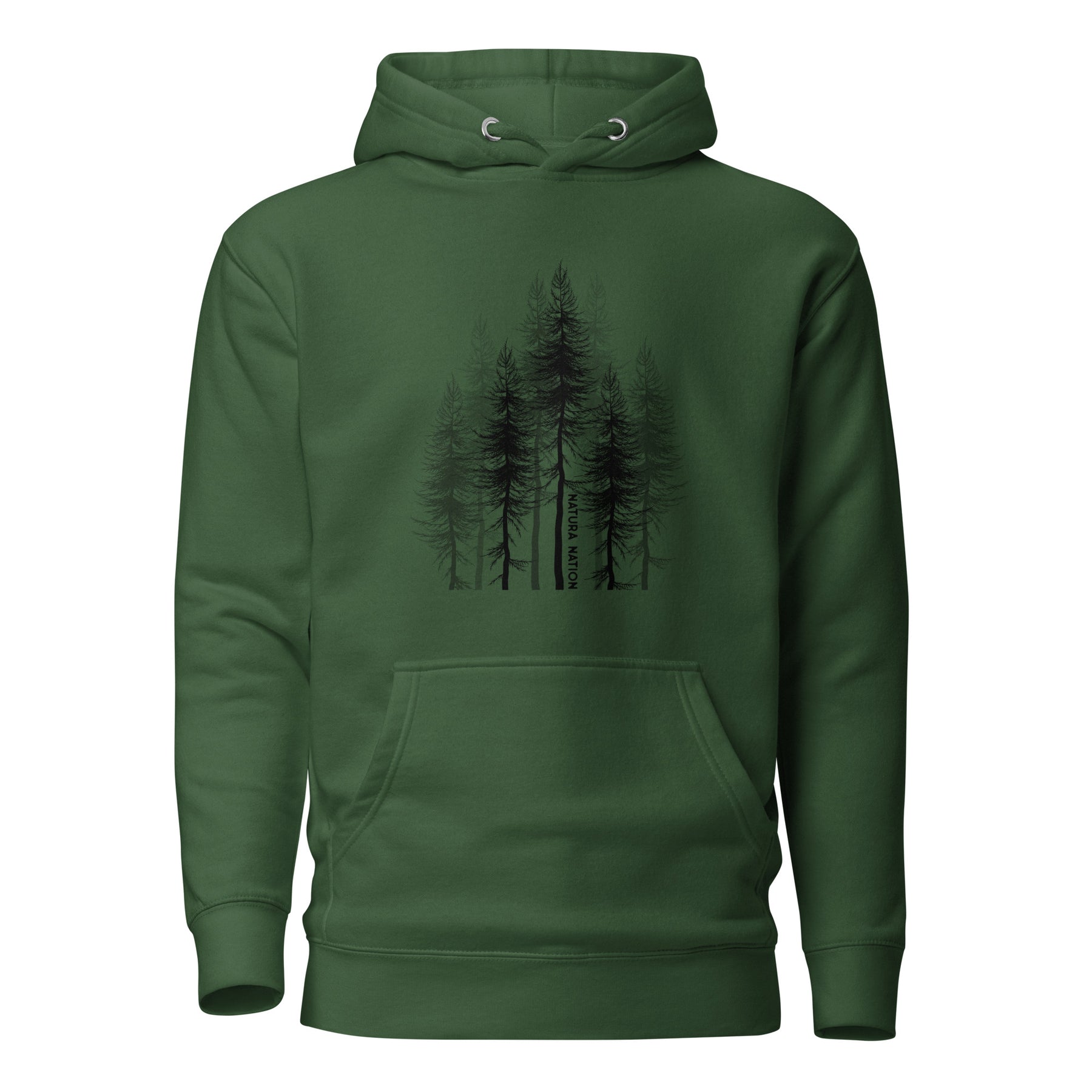
For those who don't call it hiking — they call it going home.
Whispering Forest Pines Hoodie - Forest Green
This special edition forest green hoodie features our iconic pine tree design, crafted for deep forest exploration. Inspired by the dense, vibrant canopy of ancient forests, its deep, earthy tone captures the spirit of untamed wilderness and connection to nature's profound tranquility.
Crafted for comfort, designed for those who feel most at home among the trees.
✔ Premium mid-weight comfort
✔ Nature-inspired design built for the wild
✔ 3 trees planted with every order
Conclusion: The Eternal Allure of Evergreens
Evergreen trees embody nature's resilience, thriving through seasons while supporting entire ecosystems. For a closer look at their vibrant deciduous cousins, explore our article on Red Trees. Native species like white pines and American hollies offer year-round benefits: stormwater absorption (per USDA research), carbon sequestration, and wildlife shelter. Their enduring foliage provides wind protection, winter interest, and a living legacy.
Whether planting drought-resistant Colorado blue spruce or aromatic Douglas fir, these low-maintenance guardians enhance landscapes ecologically and aesthetically. By choosing climate-appropriate varieties, we invest in sustainable beauty that grows richer with time.
FAQs - Evergreen Trees
1. What’s the fastest privacy evergreen for cold climates?
Columnar blue spruce (Picea pungens 'Fastigiata') grows 18" yearly to 25' tall and is hardy to Zone 2.
2. Can I grow evergreens in containers?
Yes! Dwarf varieties like mugo pine (Pinus mugo) thrive in 24" pots with:
50% potting mix + 50% pine bark
Winter insulation (bubble-wrap pots)
3. Why is my evergreen oozing sap?
Likely bark beetles (look for D-shaped holes). Remove infected trees to prevent spread.
4. How close to plant for a dense hedge?
Small evergreens (boxwood): 2-3 ft apart
Large evergreens (arborvitae): 5-6 ft apart
References: Evergreen Trees
University of Minnesota Extension: Evergreen Care
Arbor Day Foundation: Privacy Trees
Audubon: Evergreens for Wildlife


