
Mount Everest
Mount Everest is the highest mountain on Earth at 29,032 feet (8,849 meters), located in the Himalayas on the Nepal–Tibet border. Known as Sagarmatha in Nepal and Chomolungma in Tibet, it has captivated explorers for over a century as the ultimate symbol of human ambition and the planet's natural limits.

Photo: Mount Everest above the clouds.
What Is Mount Everest?
Mount Everest is the highest mountain on Earth above sea level, rising to a staggering 29,032 feet in the Himalayas along the border of Nepal and Tibet. For more than a hundred years, Mount Everest has stood as the ultimate test of human endurance and ambition, drawing climbers, scientists, and dreamers from every corner of the planet. Written as Mt. Everest on most maps, its very name has become shorthand for the highest achievement imaginable, the peak against which all other challenges are measured.
Part of the mighty Himalayas, Mount Everest belongs to the grand story of the longest mountain range in the world. It is the definitive answer to the question of the tallest mountain in the world, and it towers far above North America's giants. To understand Mount Everest is to understand the scale of the planet itself.
🏔️ Captivated by the Roof of the World? Give Something Back. With every order of our nature clothing, we plant three trees and support wildlife conservation. → Shop the Mountain Collection
How Tall Is Mount Everest?
At 29,032 feet (8,849 meters), Mount Everest is the highest point on the surface of the Earth. That figure was confirmed in 2020 by a joint survey between Nepal and China, which nudged the official height up by roughly two feet. For the full breakdown of the measurement and its history, see our guide to how tall is Mount Everest. While Mauna Kea is taller from base to summit, no mountain on Earth reaches higher above sea level than Mount Everest.

Where Is Mount Everest? Location, Borders, and Region
So where is Mount Everest exactly? The mountain straddles the border between Nepal and the Tibet Autonomous Region of China, in the Mahalangur section of the Himalayas. Its coordinates sit at roughly 27.9881° N, 86.9250° E. On the Nepali side, it falls within Solukhumbu District, inside Sagarmatha National Park, while the northern flank lies in Tibet. That shared border is the single most important fact about Everest's location, because it determines which government issues permits and which route a climber takes.
Ask where Mount Everest is located in the Himalayas, and the answer narrows further: It stands in the eastern Himalayas, roughly 100 miles east of Kathmandu, surrounded by a cluster of giants that includes Lhotse, Nuptse, and Makalu. Anyone researching where Mount Everest is located in the Himalayas quickly finds that Everest's location is far less remote than its reputation suggests. Flights land at Lukla, and the trek to South Base Camp takes eight to ten days on a well-trodden path through Sherpa villages.
For most travelers, asking where Mount Everest sits is really a question about access. The Mount Everest peak itself is reachable only by expedition, but the viewpoints below it are open to anyone reasonably fit. Kala Patthar, at 18,500 feet, offers the classic view of the Everest summit glowing at sunrise, and thousands of trekkers reach it every season without ever touching a rope.
The History of Climbing Mount Everest
The story of Mount Everest is inseparable from the history of exploration. In 1953, Sir Edmund Hillary of New Zealand and Tenzing Norgay, a Sherpa mountaineer, became the first climbers confirmed to reach the summit. Their achievement electrified the world and turned Mount Everest into a global icon. Decades earlier, the mysterious 1924 disappearance of George Mallory and Andrew Irvine had already woven the mountain into legend, leaving an enduring question of whether they summited before they died.
Since Hillary and Norgay, thousands have followed. The rise of commercial expeditions has made Mount Everest more accessible, but never easy or safe. Each season, climbers from around the world gather at Base Camp to attempt the same summit that once seemed impossible, following in the footsteps of the pioneers who first proved it could be done.
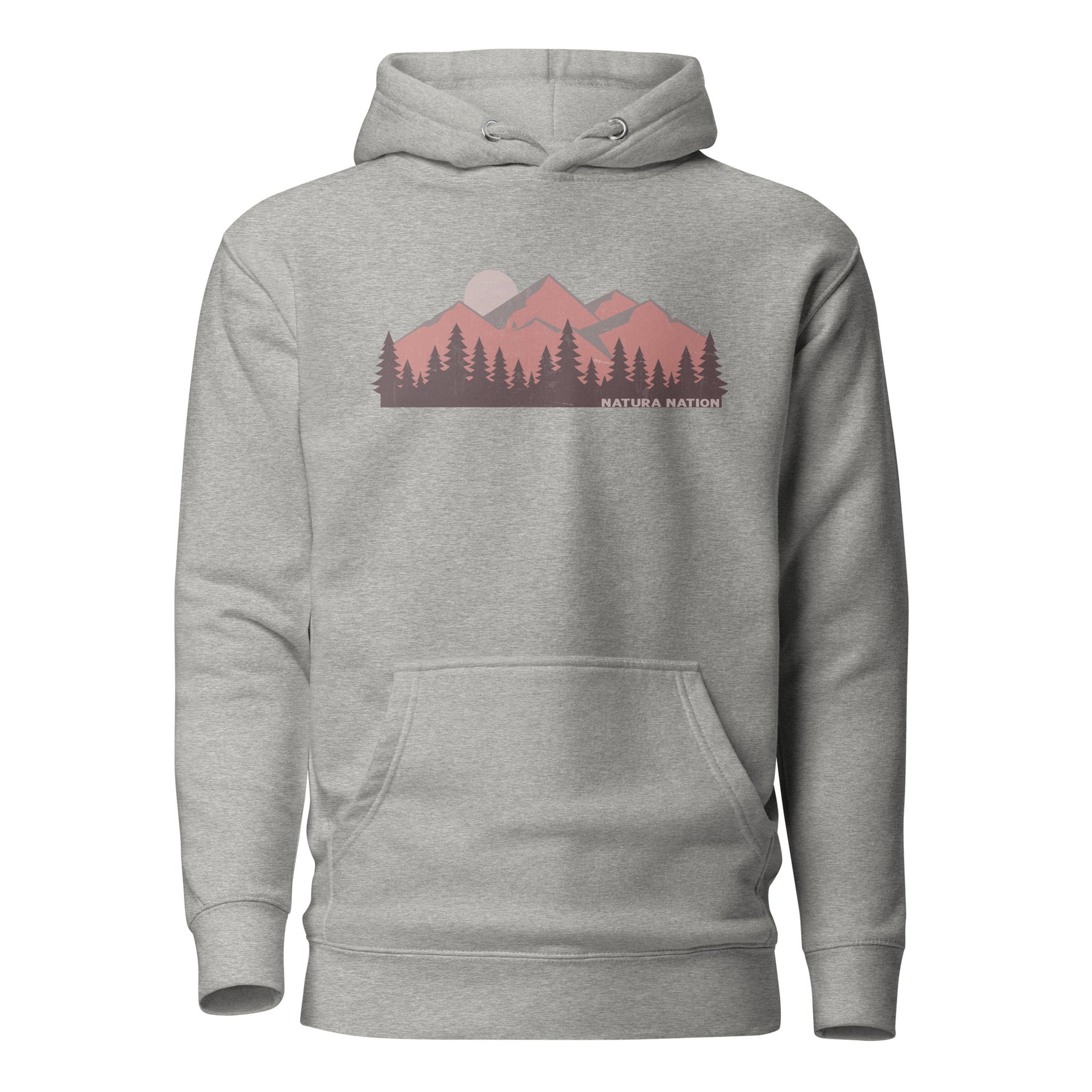
For the dreamers who keep the roof of the world on their bucket list. 🏔️
Majestic Mountain Peaks Hoodie
Everest lives in the imagination long before it lives on any itinerary. This piece carries towering peaks over a quiet pine line, made for the people who feel the pull of the highest place on Earth and carry a little of that ambition into every ordinary day.
Wear what moves you. Wear the mountains.
✔ Premium mid-weight comfort
✔ Mountain-inspired design for the wild at heart
✔ 3 trees planted with every order
The Routes Up Mount Everest
There are two main routes to the top of Mount Everest. The South Col route from Nepal, pioneered by Hillary and Norgay, is the most popular and passes through the treacherous Khumbu Icefall. The North Ridge route from Tibet offers a different set of challenges and is favored by some for its lower permit costs. Both routes converge on the same brutal truth: the final push to the summit crosses into the death zone, where survival itself is a race against time.
Climbers on Mount Everest typically spend six to nine weeks on the mountain, acclimatizing at a series of camps before their summit bid. The comparison with North American climbing, such as the highest mountain in Colorado, reveals just how much more extreme Everest is, both in altitude and in the sheer commitment required.

The Death Zone and the Dangers of Everest
Above 26,000 feet, Mount Everest enters the infamous death zone, where the air holds only a third of the oxygen available at sea level. The human body cannot acclimatize here; it slowly shuts down. Climbers face frostbite, altitude sickness, avalanches, and sudden storms. Over 300 people have died on the mountain, and many bodies remain, grim landmarks on the route to the top.
These dangers are exactly why summiting Mount Everest carries such prestige. Climbing Mt. Everest is not merely a hike to a high place; it is a calculated gamble against some of the harshest conditions on Earth. Even with modern gear, oxygen, and experienced Sherpa guides, the mountain demands profound respect, the same respect owed to every great peak from the Himalayas to the tallest mountain in California.
The Sherpa People and Mount Everest
No account of Mount Everest is complete without the Sherpa, the Indigenous people of the Everest region whose skill and endurance make most expeditions possible. Sherpa climbers fix ropes, carry loads, and guide clients through the death zone, often summiting many times. Their deep cultural and spiritual connection to the mountain, which they revere as sacred, is a reminder that Everest is a living home, not just a trophy.
Why Mount Everest Matters Beyond the Summit
Beyond mountaineering, Mount Everest plays a vital environmental role. Its glaciers feed rivers that sustain millions of people across Asia, and its rapidly changing ice is a stark indicator of global warming. The mountain also faces a growing waste problem from decades of expeditions, prompting cleanup efforts and stricter regulations. Protecting Everest means protecting both a cultural treasure and a critical water source.
For the Ones Who Feel the Pull of the Highest Places
You do not need a permit or an oxygen bottle to be the kind of person Everest speaks to. Some of us simply come alive outdoors, whether that means a Himalayan skyline, a forest trail, or a quiet stretch of coast. Natura Nation was built for exactly those people. With every order of our nature apparel, we plant three trees and support wildlife conservation.
Our Mountain Collection is for anyone who has ever looked at a photograph of Mt. Everest and felt something shift. Wearing what you love should leave the wild better off, not untouched. Discover our impact, or shop our nature clothing and wear what you stand for.
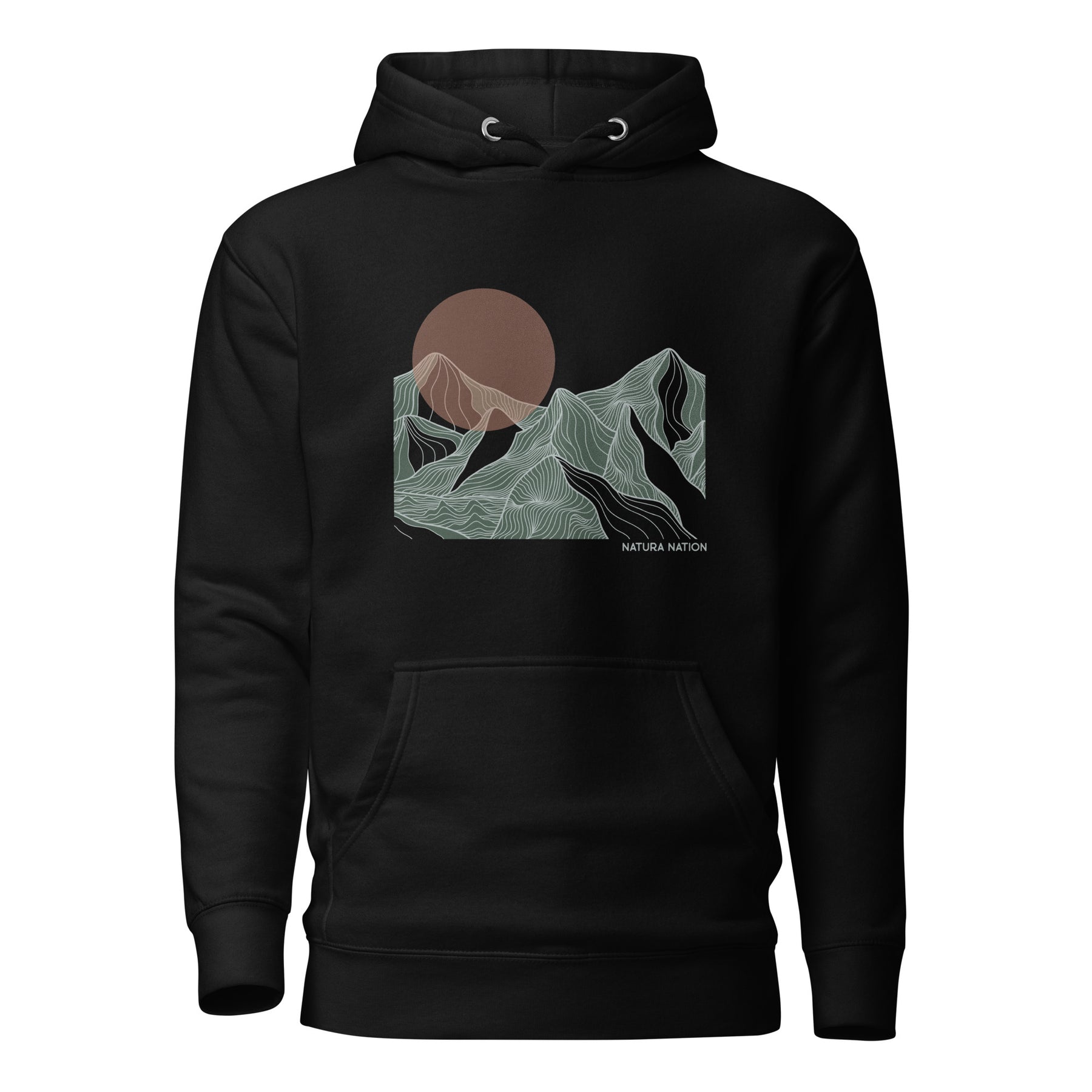
🏔️ THE ROOF OF THE WORLD. NOW SOMETHING TO WEAR BENEATH IT.
Mountain Glow Pullover Hoodie
A sunrise-over-the-peaks design for the ones who dream in altitudes. Premium mid-weight comfort, made to be lived in long after the dream takes hold.
✔ Premium mid-weight comfort
✔ Mountain-inspired design for the wild at heart
✔ 3 trees planted with every order
Conclusion: Why Mount Everest Still Holds the World's Imagination
Mount Everest, the highest mountain on Earth at 29,032 feet, is far more than a number or a climbing trophy. It is a symbol of human ambition, a sacred home to the Sherpa, a vital water tower for Asia, and a barometer of our changing planet. From Hillary and Norgay's historic first ascent to the perils of the death zone, Mount Everest continues to captivate and challenge us. And like every great peak, Mount Everest reminds us that the wildest places on Earth are the ones most worth protecting.
FAQs - Mount Everest
How tall is Mount Everest?
Mount Everest is 29,032 feet (8,849 meters) tall, the highest mountain on Earth above sea level, confirmed by the 2020 Nepal–China survey.
Where is Mount Everest located?
Where is Mount Everest located? It sits on the border between Nepal and Tibet, in the Mahalangur section of the eastern Himalayas, within Sagarmatha National Park on the Nepali side. It is called Sagarmatha in Nepal and Chomolungma in Tibet.
Where is Mount Everest in Asia?
Where is Mount Everest in Asia? It stands in South Asia, on the Nepal–China border about 100 miles east of Kathmandu, in the heart of the Himalayan range.
What country is Everest located in?
What country is Everest located in? Both Nepal and China, because the summit sits precisely on the border, so Everest is located in two countries at once.
Who was the first to climb Mount Everest?
Sir Edmund Hillary and Tenzing Norgay made the first confirmed summit of Mount Everest on May 29, 1953.
What is the death zone on Mount Everest?
The death zone is the area above 26,000 feet on Everest where oxygen is so scarce the body cannot survive long without supplemental oxygen.
How long does it take to climb Mount Everest?
A full Everest expedition typically takes six to nine weeks, including acclimatization at a series of camps before the summit push.
How many people have died on Mount Everest?
More than 300 people have died on Mount Everest, primarily from altitude sickness, exposure, avalanches, and falls.
Why do the Sherpa matter on Everest?
Sherpa climbers fix ropes, carry loads, and guide expeditions through the death zone, making most Everest ascents possible, and they revere the mountain as sacred.
References
● National Geographic - Everest
● Himalayan Database - Everest Ascents


